
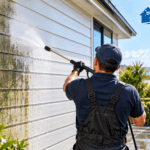
When the outside of a house starts looking dirty, stained or covered in mould, pressure washing can seem like the obvious solution. A high-pressure stream of water can quickly remove dirt from many hard surfaces, but it is not always the best choice for every part of a home.
This is where soft washing comes in.
Soft washing and pressure washing use different levels of water pressure and are suited to different surfaces and cleaning situations. Choosing the wrong method can potentially damage paint, cladding, seals or other exterior materials.
For Auckland homes, where regular rain, moisture, shade and organic growth can contribute to exterior build-up, understanding the difference can help you choose a safer and more suitable cleaning method. To understand more about environmental factors, you can read our guide on Why Does My House Get Dirty So Quickly in Auckland?
What Is the Difference Between Soft Washing and Pressure Washing?
The main difference is the amount of water pressure used and how the cleaning process removes dirt and organic build-up.
Pressure washing uses significantly higher water pressure to physically remove dirt, grime, stains and build-up from suitable hard surfaces.
Soft washing uses much lower pressure combined with an appropriate cleaning solution to loosen and treat organic contamination before it is rinsed away.
Neither method is automatically better than the other. The right option depends on the surface, the type of contamination and the condition of the property.
What Is Soft Washing?
Soft washing is a lower-pressure cleaning method commonly used for surfaces that may be damaged by high-pressure water.
Instead of relying mainly on force, the process uses a suitable cleaning solution to help break down mould, algae, dirt and other organic build-up. The surface can then be rinsed using controlled, lower-pressure water.
Soft washing can be useful for areas such as:
- Painted exterior walls
- Some types of cladding
- Weatherboard surfaces
- Areas affected by mould and algae
- Delicate exterior surfaces
- Surfaces where high pressure could cause damage
The exact cleaning approach should always depend on the material and its condition.
What Is Pressure Washing?
Pressure washing uses a stronger stream of water to remove contamination from suitable surfaces.
It can be particularly effective on durable hard surfaces where dirt and grime have built up over time.
Common applications can include:
- Concrete
- Driveways
- Paths
- Patios
- Some decks
- Hard outdoor surfaces
- Certain commercial areas
However, higher pressure does not automatically mean better cleaning. Using too much pressure on an unsuitable surface can cause problems.
Which Is Better for House Exteriors?
For many house exteriors, a lower-pressure approach can be more appropriate than aggressive pressure washing.
Exterior walls and cladding can be more sensitive than concrete or other hard surfaces. High pressure may damage paint, force water behind cladding or affect seals and joints if it is used incorrectly.
This is why professional house washing services in Auckland can be suitable for certain residential exterior surfaces where the main problem is mould, algae, dirt or organic growth.
The material, age and condition of the exterior should always be considered before choosing a cleaning method.
When Is Pressure Washing a Better Choice?
Pressure washing can be effective when cleaning durable surfaces that can safely handle higher water pressure.
Driveways and Concrete
Concrete can collect dirt, tyre marks, moss, algae and other build-up. Properly controlled pressure can help remove this contamination.
Paths and Patios
Outdoor paths and patios are exposed to rain, dirt and organic material throughout the year. Professional waterblasting services in Auckland can be useful when the surface is suitable for the method.
Some Decking Surfaces
Certain decking materials may be cleaned using controlled pressure, but the correct technique depends on the timber or surface material. Using excessive pressure on timber can damage the surface and leave visible marks.
When Should You Avoid High Pressure?
High pressure should not automatically be used simply because a surface looks heavily stained. Extra care may be needed with:
- Older painted surfaces
- Weatherboards
- Some types of cladding
- Delicate finishes
- Damaged surfaces
- Loose or deteriorating materials
- Areas around windows and doors
- Surfaces with vulnerable seals or joints
The condition of the surface is just as important as the type of material.
Why Does Auckland’s Climate Matter?
Auckland’s weather can create conditions where exterior surfaces stay damp for extended periods.
Rainfall, humidity, shade and surrounding vegetation can all contribute to the development of mould, algae and other organic growth.
Homes surrounded by trees or properties with shaded exterior walls may notice build-up more quickly.
This means exterior cleaning is not simply about removing visible dirt. Understanding why the build-up is occurring can help determine the most suitable cleaning method.
Can Soft Washing Remove Mould and Organic Growth?
Soft washing can be useful for exterior surfaces affected by mould, algae and other organic contamination.
Rather than relying entirely on high-pressure water, the cleaning process can use an appropriate solution to help break down the growth before rinsing.
This can be particularly useful where the surface needs a gentler approach.
However, the cleaning method should be selected according to the type of growth and the surface being treated.
Can Pressure Washing Damage a House?
It can if the wrong pressure, equipment or technique is used. Potential problems can include:
- Damaged paint
- Surface marks
- Water being forced into gaps
- Damage to softer materials
- Loose finishes
- Damage around seals and joints
This does not mean pressure washing is unsuitable for houses altogether. It means the pressure needs to match the surface.
A professional assessment can help determine whether pressure washing or a lower-pressure method is more appropriate.
What About Roofs?
Roofs require particular care because roofing materials can vary significantly.
Using high pressure on a roof without considering the material and its condition can potentially cause damage or force water into areas where it should not go.
If moss, lichen or organic growth is present, the appropriate cleaning and treatment method should be determined based on the roofing surface.
For broader information about managing roof growth and maintenance, see our guide about roof treatment services in Auckland.
Unsure Whether Your Home Needs Soft Washing or Pressure Washing?
Get professional advice and house washing services in Auckland from A to Z Property Services today!
Soft Washing vs Pressure Washing: Which Should You Choose?
There is no single answer for every Auckland property. A simple way to think about it is outlined below:
The table is only a general guide. The actual condition of the surface should always be considered.
Can Exterior Cleaning Prevent Mould From Returning?
Cleaning can remove existing dirt and organic build-up, but it does not permanently prevent mould or algae from returning.
If the underlying conditions remain, organic growth can develop again.
For example, shaded areas that remain damp may continue to provide favourable conditions for mould and algae. Nearby vegetation can also contribute to moisture and debris.
Regular property maintenance, good drainage and keeping surrounding areas reasonably clear can help reduce some of these conditions.
What Should You Consider Before Cleaning Your House Exterior?
Before choosing a cleaning method, consider:
- The Surface Material: Different materials have different levels of durability. A method suitable for concrete may not be suitable for painted cladding.
- The Type of Build-Up: Mould, algae, dirt, grease, moss and general dust may require different approaches.
- The Condition of the Surface: Older or damaged surfaces may require more care than newer, well-maintained surfaces.
- The Location: Areas around windows, doors, vents and joints require controlled cleaning to reduce the risk of water entering unwanted areas.
- The Desired Result: Removing surface dirt is different from treating recurring organic growth. The cleaning approach should match the actual problem.
Should You Pressure Wash Your House Yourself?
DIY pressure washing can be tempting, particularly when equipment is readily available for hire.
The main risk is using too much pressure or the wrong nozzle on a surface that cannot safely handle it.
A technique that works well on a concrete driveway can cause damage when used on painted walls or softer exterior materials.
If you are unsure about the correct pressure, cleaning solution or technique, professional advice can help avoid unnecessary surface damage.
When Should You Get Professional Help?
Professional exterior cleaning may be worth considering if:
- Mould or algae covers large areas
- Exterior surfaces are heavily stained
- You are unsure which cleaning method to use
- The property has delicate or older cladding
- You need several exterior surfaces cleaned
- High areas are difficult or unsafe to access
- Previous cleaning has not solved recurring build-up
A professional can assess the surface and determine whether a soft washing, pressure washing or another cleaning approach is appropriate.
House Washing Across Auckland
Every Auckland property is different.
A modern home with durable exterior surfaces may require a different cleaning method from an older weatherboard property. Similarly, a shaded home surrounded by trees may experience more organic growth than a property exposed to regular sunlight.
The goal should not simply be to use the highest pressure available. It should be to remove the contamination effectively while protecting the surface underneath.
Frequently Asked Questions
Is soft washing safer than pressure washing?
Soft washing uses lower water pressure, which can make it more suitable for certain delicate exterior surfaces. However, the cleaning method should still be selected based on the material and its condition.
Is pressure washing better for removing tough dirt?
Pressure washing can be very effective on durable hard surfaces such as suitable concrete areas. It is not necessarily the best option for every exterior surface.
Can soft washing clean mould from house walls?
Yes, soft washing can be suitable for exterior surfaces affected by mould and algae, depending on the material and condition.
Can pressure washing damage weatherboards?
It can if excessive pressure or an unsuitable technique is used. Weatherboards and painted surfaces generally require more care than hard concrete surfaces.
Should I use pressure washing on my roof?
Not automatically. Roof materials and conditions vary, and excessive pressure can potentially damage some roofing surfaces.
How often should I wash my home’s exterior?
There is no universal schedule. Factors such as rainfall, shade, nearby vegetation, mould growth and the condition of the exterior can influence how frequently cleaning is needed.
Can soft washing stop mould permanently?
No cleaning method can guarantee that mould will never return. If moisture, shade or other favourable conditions remain, organic growth can develop again.
Need Help Choosing the Right Cleaning Method?
If you are unsure whether your property’s exterior needs soft washing or pressure washing, the surface should be assessed before choosing a cleaning method. For homes requiring professional cleaning assistance, A to Z Property Services can assess the exterior and use an appropriate cleaning approach based on the surface and level of build-up.